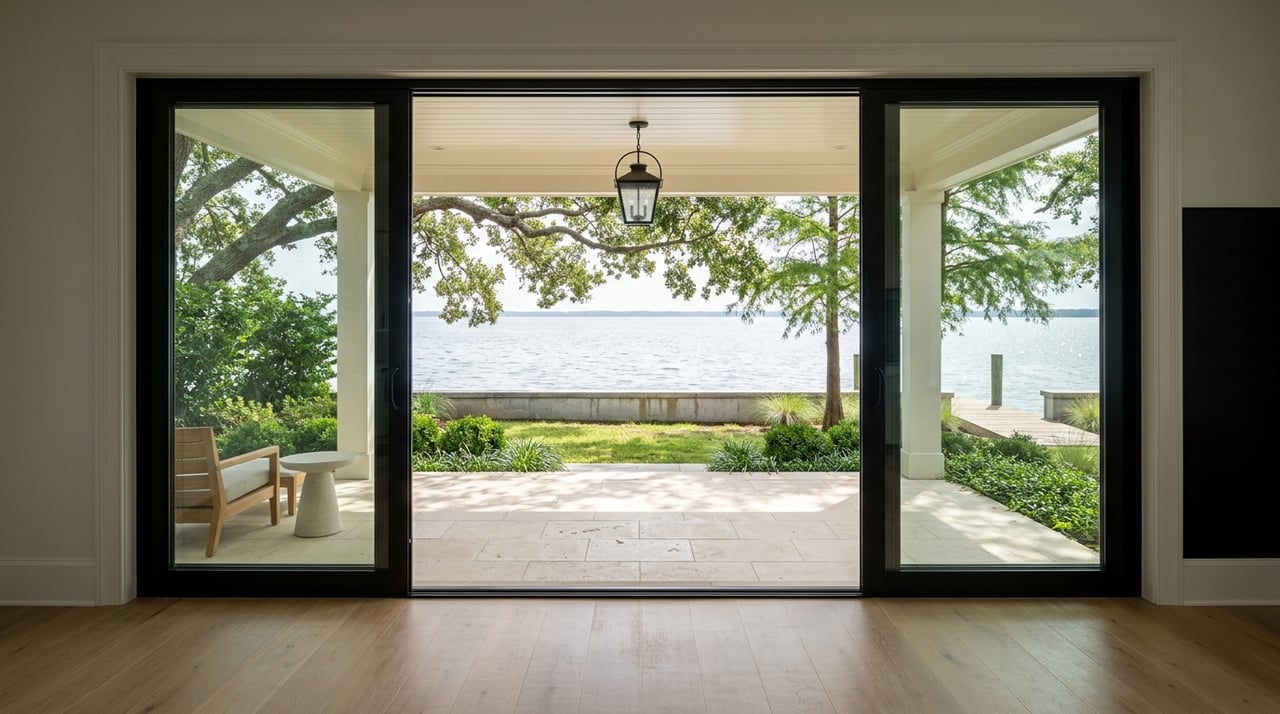
Choosing where to live in Conroe often comes down to one big question: do you want your lifestyle centered on the water or around everyday convenience? If you are weighing Lake Conroe lakefront living against an in-town Conroe home, you are not alone. The right fit depends on how you spend your time, how you commute, and what kind of maintenance you are comfortable with. Let’s dive in.
Lakefront vs. In-Town at a Glance
At a high level, Lake Conroe and in-town Conroe offer two very different daily experiences. Local tourism and planning sources describe Lake Conroe as a large, recreation-focused reservoir, while downtown Conroe is framed as a historic, amenity-rich center with dining, arts, entertainment, and neighborhood living nearby.
Lake Conroe is a major draw for buyers who want boating, fishing, swimming, and water views built into daily life. Published local figures vary slightly, but sources describe the lake as roughly 21,000 to 22,000 acres with about 150 to 157 miles of shoreline. That scale matters because it supports a true waterfront lifestyle, not just a small neighborhood pond experience.
In-town Conroe offers a different kind of value. The city’s downtown plan describes downtown as an urban neighborhood with single-family living near amenities, which means this area is not just about shops and events. It is also about convenience, access, and a more connected day-to-day routine.
Why Lake Conroe Appeals to Buyers
If you picture weekends on the boat, sunset views from your backyard, or easy access to marinas and lakeside dining, lakefront living may feel like the obvious choice. Lake Conroe is built around water recreation, with public swimming, boating access, kayak and watersports options, and multiple public ramps and marina areas around the reservoir.
For many buyers, the biggest benefit is that recreation becomes part of normal life instead of something you plan for occasionally. You may be able to step outside and enjoy the water, launch a boat nearby, or meet friends for a meal with lake views. That kind of setting can feel like a retreat, even on an ordinary weekday.
Lakefront homes can also offer a strong lifestyle identity. If your home search is driven by views, outdoor living, and a setting that feels more removed from busy commercial corridors, the lake has a lot to offer.
Lakefront priorities that make sense
Lakefront living often fits best if your top priorities include:
- Boating or watersports
- Fishing and swimming access
- Water views from home
- A vacation-like atmosphere
- Outdoor entertaining centered on the lake
If those features rank above quick errands and downtown access, a lakefront property may line up well with your goals.
Why In-Town Conroe Appeals to Buyers
In-town Conroe tends to attract buyers who want to stay close to restaurants, entertainment, parks, and everyday services. Downtown Conroe is known for historic streets, galleries, live theatre, live music venues, antique shopping, and recurring festivals. That creates a year-round rhythm that is more social and service-oriented than lakefront living.
You also get strong recreation options without living on the water. Local economic development sources note 26 parks in the area, including Carl Barton Jr. Park, which offers trails, sports facilities, fishing, and public art. So if you want outdoor access but do not need a dock in your backyard, in-town living still gives you plenty to enjoy.
For many buyers, the biggest advantage is convenience. You may have easier access to errands, downtown amenities, and major commuter routes, which can simplify busy workweeks.
In-town priorities that make sense
In-town living often fits best if you value:
- Easier access to restaurants and entertainment
- Nearby parks and public spaces
- A more connected daily routine
- Shorter errand runs
- Better access to major roads and commuter corridors
If you want your home base to support a practical, efficient lifestyle with culture and amenities nearby, in-town Conroe may be the stronger match.
Commute and Access Differences
Your daily drive can shape how you feel about a home long after move-in day. In Conroe, that is one of the clearest differences between lakefront and in-town living.
TxDOT identifies SH 105 as the primary route to Lake Conroe, and public lake access also relies on roads such as FM 830, FM 1097, and Beachwalk Boulevard. In practical terms, that means many lake-oriented routines depend more heavily on driving to and from shoreline roads, marina access points, and highway connections.
In-town Conroe has an access advantage for many buyers because downtown is positioned near I-45, and the city’s downtown plan includes a hike-and-bike loop connecting major amenities. Census QuickFacts reports mean travel time to work of 28.6 minutes in Conroe city and 31.8 minutes in Montgomery County. While every address is different, in-town locations are generally better positioned for shorter errand runs and easier regional access.
A simple way to think about it
If you do not mind more car-based routines in exchange for water access, the lake may be worth it. If convenience during the workweek matters more, in-town living often feels easier.
Lifestyle and Entertainment Trade-Offs
The choice between lakefront and in-town Conroe is not really about which is better overall. It is about which kind of lifestyle feels more natural to you.
Downtown Conroe has the stronger concentration of year-round dining, theatre, galleries, live music, and festivals. If you enjoy being able to head out for dinner, catch a performance, or spend time in a historic downtown setting, living in town places more of that within easy reach.
Lake Conroe offers a more recreation-first environment. Public swimming at Scott’s Ridge, boating infrastructure, watersports, marinas, and lakeside dining all support a routine centered on the water. For some buyers, that feels ideal. For others, it can feel less convenient if they prefer more walkable or centralized entertainment options.
Home Features and Maintenance Considerations
This is where the decision becomes more practical. Lakefront homes can be exciting, but they also come with responsibilities that many buyers do not fully consider at first.
On Lake Conroe, the San Jacinto River Authority regulates residential docks, boat slips, and private bulkheads. Private bulkheads require permits, and SJRA states that reservoir levels are not guaranteed to support them. Texas Parks and Wildlife notes that bulkheads and boat docks dominate much of the lower shoreline, while lake levels can fluctuate by about 1 to 3 feet.
SJRA also regulates on-site sewage facilities within 2,075 feet of the shoreline under standards stricter than general state rules. The takeaway is simple: waterfront ownership can involve more approvals, more infrastructure, and more attention to water-related conditions than a typical in-town lot.
By comparison, an in-town property usually offers a more straightforward maintenance picture. You may still have normal homeownership tasks, of course, but you are less likely to deal with shoreline-specific structures or lake-use regulations.
Questions to ask before buying lakefront
If you are considering direct waterfront property, it helps to ask:
- Does the property have a dock, slip, or bulkhead?
- What permits or approvals apply to those features?
- How does this property handle wastewater or sewage requirements near the shoreline?
- What maintenance costs should you expect over time?
- How might changing lake levels affect use of the shoreline?
These questions can help you compare lifestyle appeal with long-term upkeep.
A Middle Ground: Lake-Adjacent Living
You do not have to choose between direct waterfront and fully in-town living. For some buyers, a lake-adjacent home offers the best balance.
A property near Lake Conroe can give you proximity to boating, dining, and recreation without taking on the full responsibilities of shoreline ownership. Based on local regulatory guidance, this can mean avoiding some of the extra concerns tied to bulkheads, docks, and shoreline-specific systems.
If you love the idea of the lake but want a simpler ownership experience, this option is worth considering. It can be especially appealing if you want flexibility and lower day-to-day maintenance demands.
How to Choose the Right Fit
When you strip away the marketing language, the choice usually comes down to what you want your ordinary Tuesday to feel like. Do you want water views, marina access, and a recreation-first setting? Or do you want easier errands, faster access to downtown destinations, and more built-in convenience?
Choose Lake Conroe if your lifestyle is centered on boating, fishing, swimming, and time outdoors on the water. Choose in-town Conroe if you value proximity to restaurants, arts, parks, live events, and commuter routes. If you want a bit of both, a nearby but non-waterfront home may give you the balance you need.
A smart move is to compare not just the homes themselves, but also the routines they create. The right answer is the one that supports your life after the excitement of the search wears off.
If you are weighing Conroe lakefront versus in-town living and want a clear, tailored strategy for your move, Eve Kneller can help you compare neighborhoods, lifestyle trade-offs, and home options with a thoughtful, detail-focused approach.
FAQs
What is the main difference between Lake Conroe and in-town Conroe living?
- Lake Conroe living is centered on water access, boating, and lake views, while in-town Conroe living is centered on convenience, downtown amenities, dining, arts, and everyday access.
Is Lake Conroe better for recreation than in-town Conroe?
- Lake Conroe offers stronger water-based recreation such as boating, swimming, kayak access, and marina use, while in-town Conroe offers parks, trails, theatre, galleries, festivals, and other non-water activities.
Does lakefront living in Conroe involve more maintenance?
- Yes. Local regulations show that lakefront ownership can involve permits for docks and bulkheads, added shoreline infrastructure, and stricter sewage facility rules near the lake.
Is in-town Conroe more convenient for commuting?
- In many cases, yes. In-town locations are generally closer to downtown services and I-45 access, while lakefront routines often rely more on SH 105 and other roads serving marinas and boat ramps.
Should you choose a lake-adjacent home instead of direct waterfront in Conroe?
- A lake-adjacent home can be a strong option if you want to stay close to Lake Conroe recreation while avoiding some of the added responsibilities that come with direct shoreline ownership.