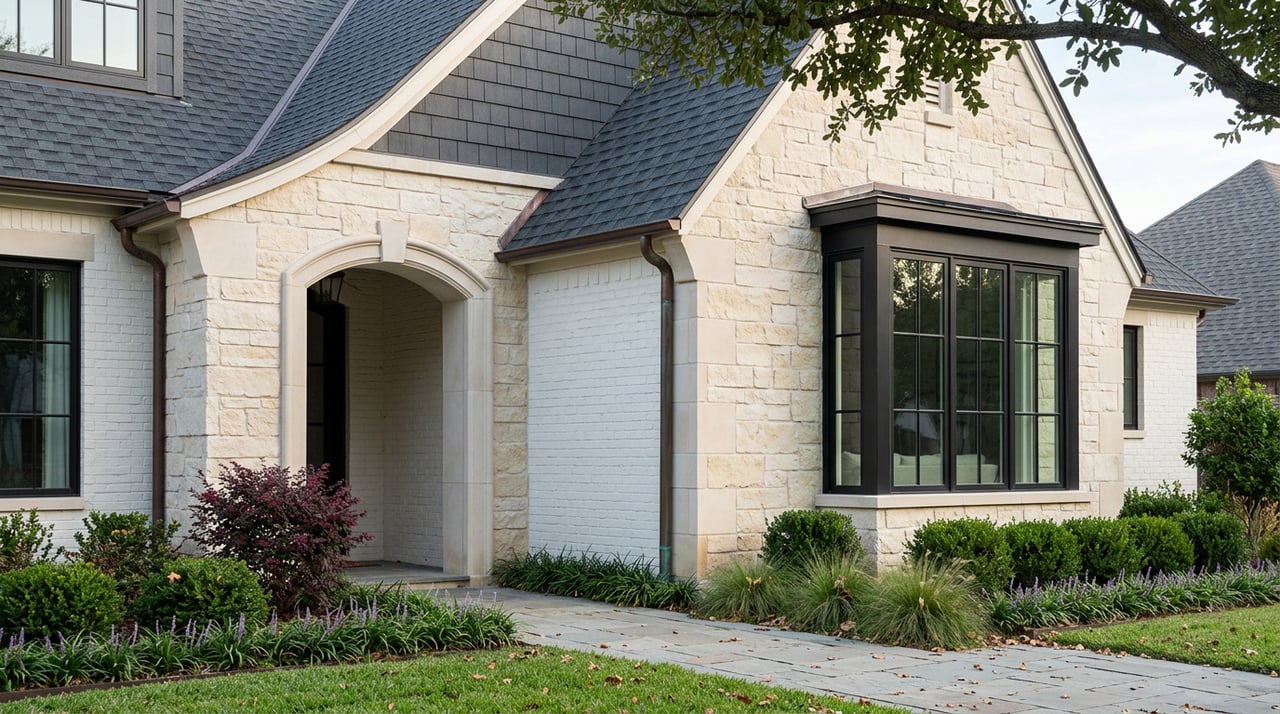
If you buy a Magnolia home with a private well, you have 60 days after closing to file paperwork with the Lone Star Groundwater Conservation District. If the home has an aerobic septic system in unincorporated Montgomery County, you can't maintain it yourself unless you are a certified maintenance provider. Neither of these is a reason to pass on the house. They are obligations that come with the deed, and some of them are billed every year.
Most buyer guides call the well and septic "inspection items." In Magnolia they are better treated as regulated assets. The question to ask about each one is what status it is in, because that status transfers to you whether or not anyone mentioned it at the closing table.
The first two months of ownership, in order
Here is the timeline as the current rules describe it:
- Closing day. Your septic permit transfers to you automatically under state rules. You don't file a separate application.
- Within 30 days, if the system's initial service policy has expired. State rule gives a new owner 30 days after the transfer to get a maintenance contract or maintain the system personally. In unincorporated Montgomery County, the personal option disappears for aerobic systems unless you hold a maintenance provider certification.
- Within 60 days. You, as the buyer, submit Lone Star GCD's Transfer of Ownership form, one form for each well or permit.
The seller has a role in that last step. Lone Star GCD's current exempt well registration form asks the registrant to agree that, when the property sells, they will tell the buyer a Transfer of Ownership is required. The filing itself is still the buyer's job.
The 60-day filing is the simple part. What it starts depends on which category your well falls into, and that is where Magnolia lot sizes come in.
The ten-acre line in the exemption language
Every well in Montgomery County has to be registered with Lone Star GCD, including wells that are exempt from permits. "Exempt" has a specific meaning here. The District's current exempt well form describes the domestic exemption as a well used only for one single-family residence, with no more than one acre of lawn irrigation, that can't produce more than 25,000 gallons per day, "on a tract of land larger than ten acres."
Many Magnolia homes with private wells sit on a few acres, not ten. Read plainly, that wording means a domestic well on a smaller tract may not qualify for the domestic exemption. Before you assume a well is either exempt or non-exempt, confirm its classification with the District, because the two categories carry very different obligations.
Under the District's rules, the difference looks like this:
- Exempt wells must be registered but don't need a meter.
- Non-exempt wells must be metered at all times. They need an operating permit to produce water. Permit holders owe an annual water use fee and an annual production report.
The fee language is blunt. Lone Star GCD's FAQ says annual water use fees "are due in full in perpetuity irrespective of gallons used," and they are due January 1 each year. Late fees follow on February 1, and non-compliance penalties follow if payment hasn't arrived by March 1. The District's forms page lists a 2026 non-exempt usage rate of $0.085 per 1,000 gallons permitted, with a $10 minimum regulatory usage fee. It's a modest number. The point is that the bill recurs, it is tied to the permitted allocation rather than what you actually pump, and it becomes yours once the well does.
Older wells can arrive with a permit already attached
The age of the home matters too. Lone Star GCD's FAQ explains that when the District was created, all previously drilled wells received Historic Use Permits with a documented allocation. Those permits have their own rules. Holders can't apply for a larger allocation or add new wells to the system, and doing either can turn the Historic Use Permit into an Operating Permit.
That's why the District's guidance to real estate agents asks for two checks after a purchase: whether the well is registered, and whether there is "an open Operating Permit assigned to the well." An open permit comes with an annual fee schedule. If the seller has been paying it, the buyer needs to know it exists before the January 1 invoice shows up at a new address.
The reverse case is a well that was never registered. In that situation, the FAQ says the property owner is responsible for registration and "may be subject to non-compliance penalties." The District's non-exempt form includes an application purpose for an "Existing Well (Previously drilled without permit)," so there is a path to fix it. It is not free.
What each outcome costs in District fees
The fee schedule the Lone Star GCD board adopted in November 2025, effective January 1, 2026, prices each possible starting point differently:
| Well status you inherit | What you file | 2026 District fee |
|---|---|---|
| Registered, exempt | Transfer of Ownership | $50 |
| Registered, non-exempt permit | Transfer of Ownership | $150 |
| Not registered | New well registration | $500 per well |
| Needs an Operating Permit | Permit application | $500, or $1,500 if a hydrogeological report is required |
The $50 exempt transfer fee is new. The District's February 2025 transfer form listed a $150 non-exempt transfer fee and no exempt fee at all. The 60-day deadline didn't change between the two versions. If a checklist from last year says exempt transfers are free, it is out of date.
The gap between the top row and the bottom two is why this belongs in your option period and not after closing. You can look up the well yourself on the District's public well map. If it doesn't appear there, the District suggests contacting it to find out whether the well is registered.
The septic side runs on a maintenance contract
In the county's jurisdiction, the septic system follows the same pattern as the well: a permit plus ongoing duties. Montgomery County's on-site sewage order requires a permit for every system, no matter the lot size. That order covers unincorporated areas. It doesn't apply inside incorporated cities unless a city has an intergovernmental agreement with the county, so homes inside Magnolia city limits may follow a different process.
For aerobic systems, the county requires contracted maintenance by a certified provider. The county's template for a new system's initial service policy runs two years after inspection, with at least three inspections a year, one every four months. On a recently built home, part of that policy may still be running. On an older one, you'll want the current provider's name, the contract end date, and recent service records before your option period ends, so the 30-day clock isn't your first look at them.
A sale doesn't trigger a county inspection. The order lets the county's designated representative inspect "at any time," but it doesn't tie inspections to a transfer of ownership. Any pre-closing evaluation is something the buyer arranges. For reference, the county's fee schedule lists $150 for a septic reinspection. On pumping, TCEQ recommends every three to five years for conventional tanks and says aerobic systems depend on sludge depth and manufacturer guidance.
Where the disclosure forms help, and where they stop
Three documents usually come up. The first is the TREC Seller's Disclosure Notice. The current version took effect May 28, 2026. It asks the seller to identify a septic system and a well as the water source, and to disclose known defects in plumbing, sewers, or septics. The form itself says it reflects the seller's knowledge and doesn't replace inspections.
The second is a separate Water Notice covering groundwater and surface water rights. Lone Star GCD's guide for agents points sellers to it and recommends confirming the well's registration and permit status. The third is the Texas REALTORS Information About On-Site Sewer Facility, TXR 1407, which was revised in January 2026.
None of the three asks for a Lone Star GCD registration number or an open permit balance, and that's where the gap usually is. A seller can fill out every disclosure honestly and still not know the well's permit category.
For sellers, the paperwork is part of the pitch
In August 2026, HAR reported a median of 32 days on market for 77355 sales, up from 26 a year earlier. Closings were nearly flat at 65 against 66, and the median sold price was $290,000, down from $316,875. When buyers have more time to look, a listing that answers the well and septic questions upfront takes one source of uncertainty off the table. That means the well registration or permit number, a current printout from the District's well map, the aerobic provider's contract, and recent service reports, all ready in the listing file. A buyer who would otherwise spend part of the option period chasing Lone Star GCD can spend it on the house.
Quick answers
Does the seller file the Lone Star GCD transfer? No. The current form puts the duty on the buyer, within 60 days of the transfer.
Do I need a new septic permit when I buy? Under state rules the permit transfers to the new owner automatically when the property sells. What you need is the maintenance arrangement.
Who do I ask about my well's classification? Contact Lone Star GCD directly. Its FAQ says the permitting team can tell you which steps apply based on the well's registration and permit status.
Eve's paralegal background shows up most on properties like these, where a well registration, an aerobic service contract, and three disclosure forms all have to line up before you close. If you're buying or selling acreage in Magnolia and want those details sorted out early in your contract, Eve Kneller can walk through them with you. Request your free CMA and consultation.